Quick answer
Waterproof flooring is often worth comparing for basements, kitchens, mudrooms, laundry-adjacent spaces, bathrooms, entries, pet areas, and busy family rooms. Luxury vinyl plank, waterproof plank products, and tile are common short-list options. Just remember that waterproof flooring does not make the entire room flood-proof, and installation details still matter.
Guide overview
Waterproof flooring is helpful language, but it should not be the only thing driving the decision. A product can resist water while the room still has subfloor, wall, trim, transition, or trapped-moisture concerns.
For Minnesota homes, the practical question is where moisture actually shows up: wet shoes in entries, snowmelt near mudrooms, spills in kitchens, pet accidents, laundry routines, basement humidity, or bathrooms and lower-level spaces.
The best waterproof flooring plan starts with the room, then compares product construction, texture, warranty, installation method, and how the surface will feel in daily use.
Key takeaways
- Waterproof flooring can help with spills, wet shoes, pets, kids, and cleanup.
- Waterproof does not mean flood-proof or moisture-proof for the entire room assembly.
- Luxury vinyl plank and waterproof flooring are often strong for busy, practical rooms.
- Tile can be a smart fit for bathrooms, laundry-adjacent areas, and wet-prone zones.
- The right product depends on subfloor conditions, transitions, texture, warranty, and room use.
Waterproof does not mean every product fits every room
Waterproof flooring can be a smart choice, but the word waterproof usually describes the flooring material, not the entire room. Water can still affect walls, trim, subfloors, underlayment, transitions, adhesives, and nearby finishes.
- Ask what part of the product or installation is considered waterproof.
- Review warranty terms for standing water, installation method, and approved rooms.
- Solve active leaks, drainage problems, or recurring water intrusion before flooring is installed.
Rooms where waterproof flooring often makes sense
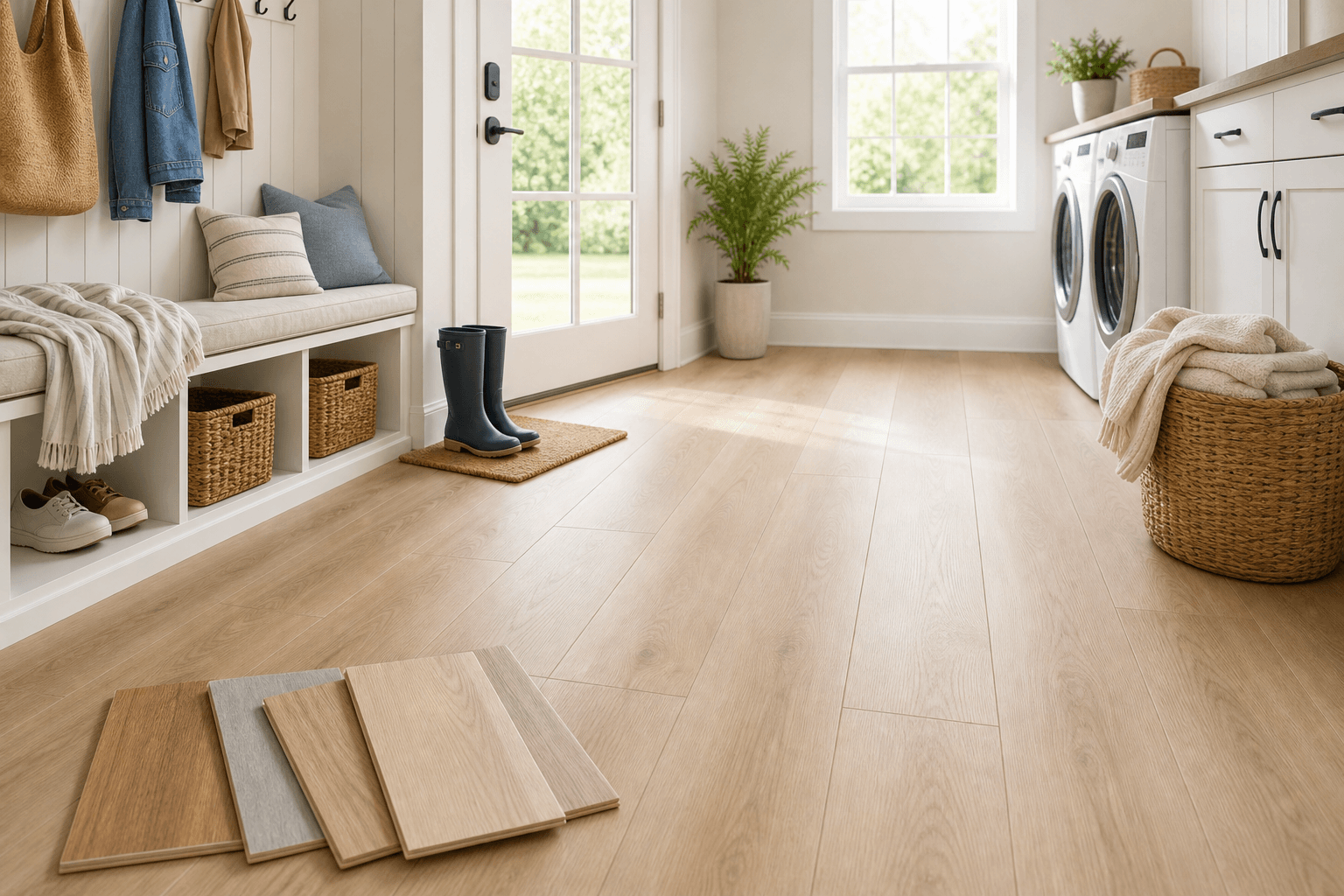
Basements, kitchens, bathrooms, mudrooms, laundry-adjacent rooms, entries, and pet-heavy areas are common places to compare waterproof flooring options. The goal is not only water resistance. It is choosing a surface that fits the room's cleanup routine.
- Basements and lower levels
- Kitchens and open main floors
- Bathrooms and laundry-adjacent rooms
- Mudrooms, entries, and pet zones
Texture and cleaning matter as much as the label
A waterproof surface still needs to feel right underfoot and clean up in a way that fits the household. Texture, sheen, plank bevels, grout lines, slip resistance, and color all affect how the floor looks and works once it is installed.