Quick answer
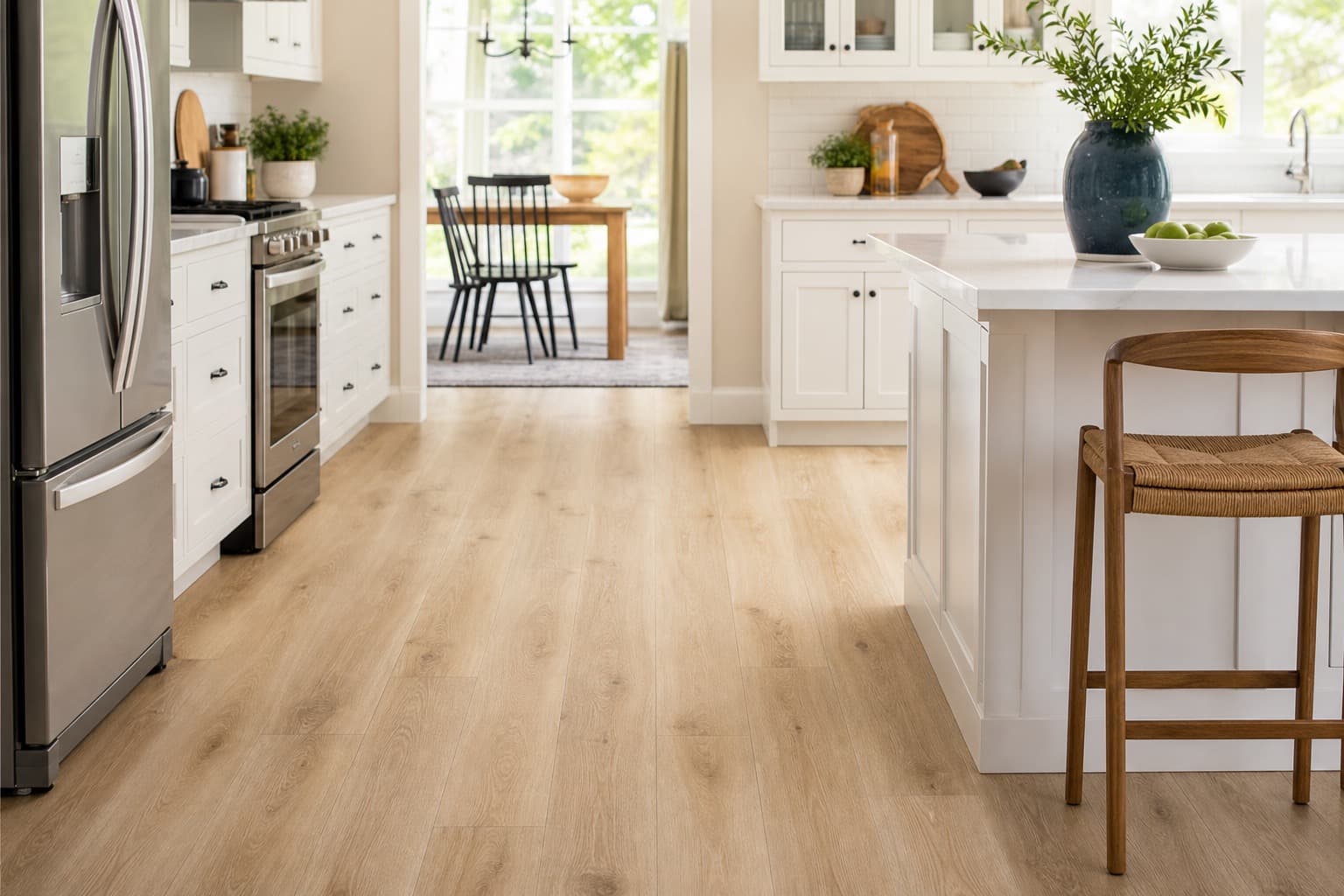
Luxury vinyl plank is usually the stronger choice for rooms with spills, wet shoes, pets, kids, kitchens, entries, laundry-adjacent routines, and lower-level use. Laminate can be a strong choice in dry living rooms, bedrooms, offices, hallways, and larger updates where wood-look style, firmness, durability, and practical value matter. The right answer starts with the room conditions, not product-category hype.
Guide overview
Luxury vinyl plank and laminate are both popular because they can refresh a home with a wood-look floor without choosing traditional hardwood everywhere.
They overlap visually, but they behave differently. LVP is often stronger around moisture and cleanup. Laminate can feel firm and wood-like in dry rooms and may offer strong value when the room conditions fit.
The best comparison looks at water resistance, daily durability, pets and kids, comfort, sound, appearance, cost, and whether the product is appropriate for the room.
Key takeaways
- LVP is often better for kitchens, entries, mudrooms, basements, pets, kids, and spill-prone spaces.
- Laminate can be a good fit for dry living rooms, bedrooms, offices, hallways, and budget-conscious wood-look updates.
- Water resistance is usually the biggest practical difference.
- Durability depends on product quality, wear surface, installation, subfloor, and maintenance.
- Samples should be compared at home because tone, sheen, and texture change in actual light.
Water resistance is the biggest practical difference
LVP is often chosen for rooms where spills, wet shoes, pet messes, or lower-level moisture concerns are part of daily life. Laminate products vary widely, and even water-resistant or waterproof-labeled laminate should be checked carefully against the room, warranty, and installation requirements.
Durability depends on more than the product name
Both LVP and laminate can be durable, but not all products are built the same. Wear layer, surface texture, core construction, locking system, subfloor prep, room conditions, and manufacturer guidelines all influence performance.
- Ask how the floor handles scratches, dents, rolling chairs, pets, kids, and active traffic.
- Review warranty language for water exposure, installation method, and room use.
- Compare samples where the floor will meet cabinets, trim, doors, and nearby rooms.
Comfort, sound, and feel underfoot matter
Laminate often feels firm and wood-like in dry rooms. LVP can feel slightly more resilient depending on construction and underlayment. In either case, sound, warmth, and comfort depend on the room, subfloor, underlayment, furniture, and rugs.
Appearance is not just color
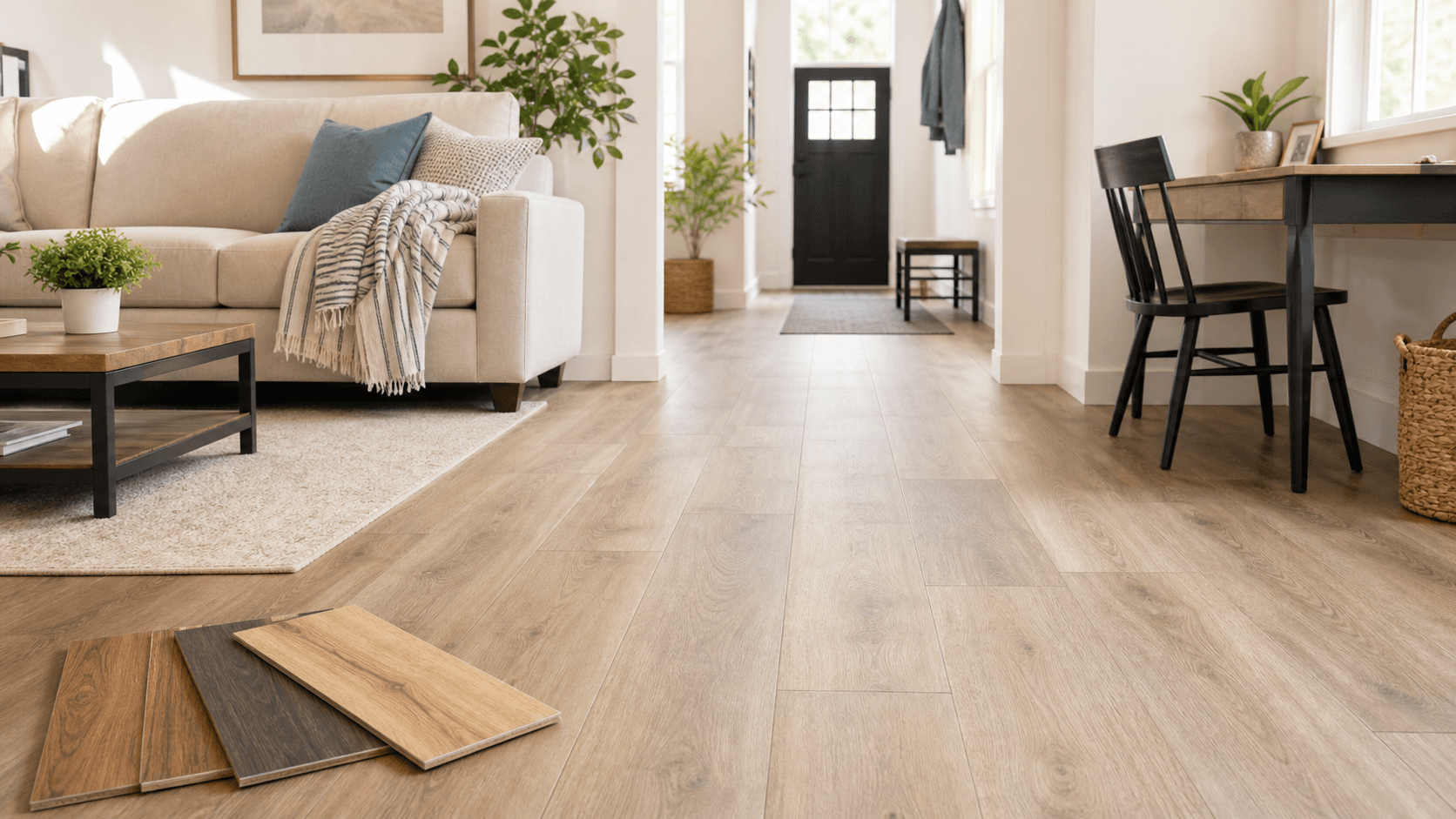
Wood-look flooring should be judged by plank width, pattern repeat, bevel detail, texture, sheen, and how the color responds to natural and evening light. A sample that looks calm online can read too gray, too yellow, too busy, or too flat in the actual room.
Installation details can change the right answer
Both categories need the right subfloor conditions, expansion planning, transitions, door clearance, and installation method. Lower levels, kitchens, and larger open-plan spaces deserve extra planning before the product is selected.